

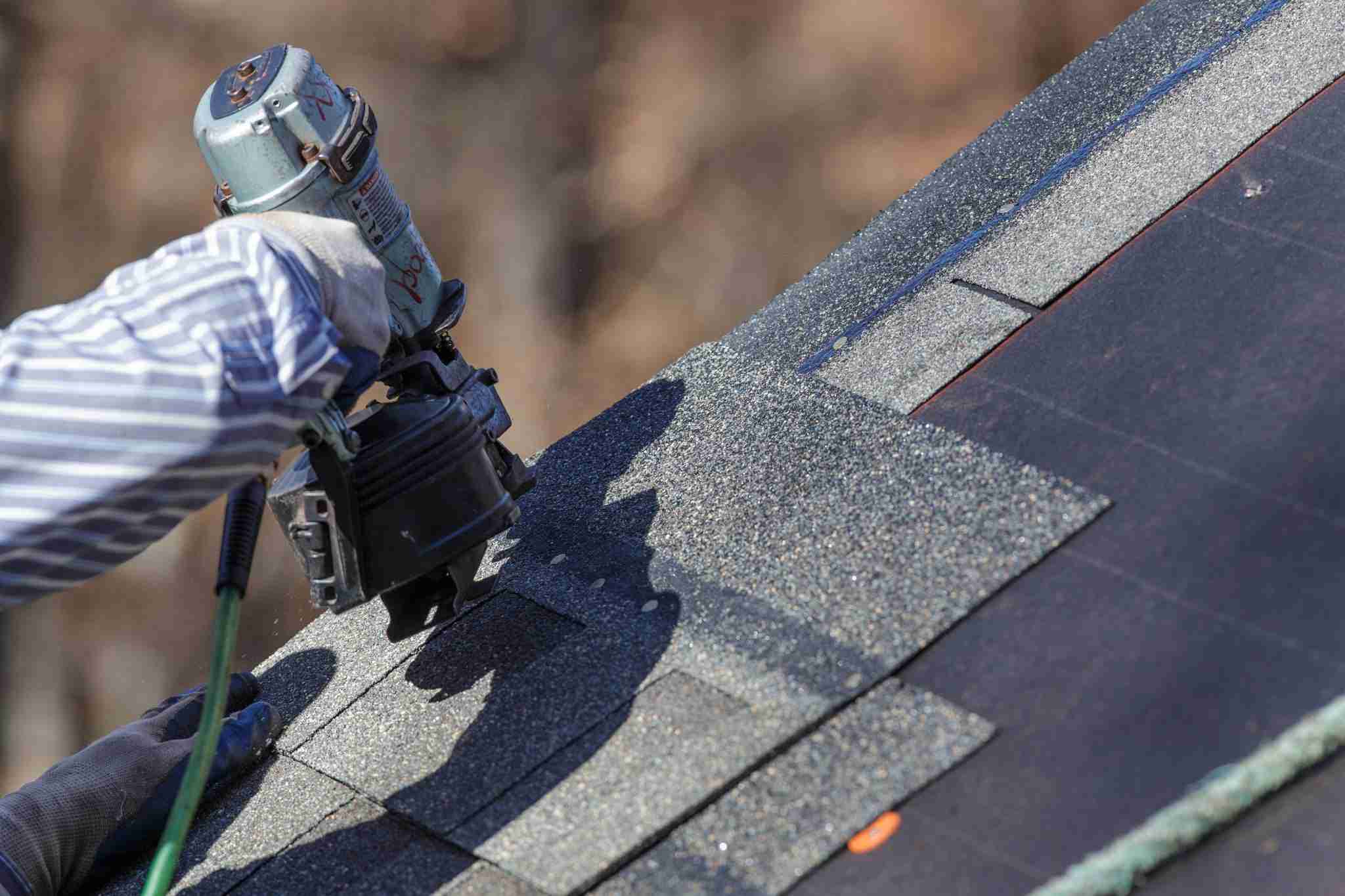
The scenario plays out on thousands of claims every storm season. Hail chews up two slopes. The carrier estimate pays to replace those two slopes. And the shingle on the roof — installed nine years ago — was discontinued in 2021. The closest match available today is a different line, a different granule blend, and a visibly different color once it’s on the roof. Now what?
That’s the shingle matching problem, and where it lands — patched roof versus full replacement — often turns less on the damage than on the state the house sits in and the quality of the file the roofer builds. I’ve handled these from both sides of the desk, and the pattern is consistent: matching claims are won with evidence and lost with arguments. Here’s how the whole thing actually works.
The Shingle Matching Problem in Two Minutes
Most homeowner policies promise repair or replacement with material of like kind and quality — and say nothing at all about what happens when like kind and quality no longer exists. The policy is usually silent on matching, which means the answer lives one level up, in state insurance regulation and case law.
The template most states work from is the NAIC’s Unfair Property/Casualty Claims Settlement Practices model regulation, which says that when replaced items don’t reasonably match in quality, color, or size, the insurer should replace items in the area to achieve a reasonably uniform appearance. Two things about that sentence matter enormously. First, “reasonably uniform appearance” is the phrase the entire fight orbits. Second, the NAIC model is a template — it has zero force of law until a state adopts it, and states have adopted it unevenly, modified it, or ignored it entirely.
So the first question on every matching claim isn’t “is the shingle discontinued?” It’s “where is the house?”
What the Law Actually Says (It Depends on the State)
The country sorts into three rough buckets.
States with explicit matching rules. Ohio’s administrative code requires replacement sufficient to produce a reasonably comparable appearance. Kentucky’s claims settlement regulation requires replacing items in the area to conform to a reasonably uniform appearance. Iowa’s rule adds the phrase everyone in this industry knows — the appearance must be reasonably uniform within the same line of sight. Nebraska and Utah have similar regulatory language, and Florida’s statute (§626.9744) requires reasonable repairs or replacement in adjoining areas while explicitly letting the insurer weigh cost, achievable uniformity, and the remaining useful life of the undamaged portion. Same family of rules, meaningfully different teeth.
States that got there through the courts. Minnesota’s Supreme Court held in Cedar Bluff (2014) that a color mismatch between new and existing siding was itself covered loss — “comparable material and quality” means a reasonable color match. Illinois reached matching through the Seventh Circuit’s Windridge of Naperville decision. In these states the argument runs through policy language rather than a regulation, which changes how the file gets built.
States with nothing. Texas is the famous example — no matching statute, no matching regulation. There the outcome rides entirely on policy language and negotiation, and increasingly on whether the policy contains anti-matching language, because carriers have started adding endorsements and roof payment schedules that expressly limit matching exposure. Which is the standing rule on every matching claim anywhere: read the policy first. A matching endorsement — or an anti-matching one — beats everything else in this article.
Matthiesen, Wickert & Lehrer keeps a 50-state matching chart that belongs in your bookmarks, and United Policyholders publishes a deeper memo on matching in replacement cost policies with the regulatory and case citations state by state. Know your state’s bucket before you write the first email — and know exactly where your role in that conversation ends, which matters enough to get its own section.
Where Roofers Have to Stop: Policy Talk Is Public Adjusting
Here’s the part of the matching conversation that can cost you far more than one claim, so read it twice.
Matching sits closer to the insurance policy than almost any other supplement topic — the entire argument is about what coverage requires. That makes it the easiest place for a roofer to slide, sentence by sentence, from documenting damage into interpreting a policy. And in most states, interpreting a policy, advising a homeowner on what their coverage owes, or negotiating coverage on their behalf without a license is the unlawful practice of public adjusting. States prosecute it. Depending on the jurisdiction, it can mean fines, criminal exposure, jeopardy for your contracting license, and contracts rendered unenforceable — meaning you can do the roof and lose the right to collect for it.
The line in practice:
- A roofer can: inspect and scope the damage, document product identification and discontinuation, photograph the mismatch, write the estimate, and submit the supplement with the evidence attached.
- A roofer cannot: sit at the kitchen table and tell the homeowner what their policy covers, explain what the matching statute entitles them to, or advocate the coverage position to the carrier on the homeowner’s behalf.
Notice the documentation stack in the next section never requires crossing that line — every item in it is a fact about the roof, not an opinion about the policy. That’s by design.
When a matching claim genuinely reaches the point where someone needs to discuss policy issues with your client — what the coverage requires, whether to invoke appraisal, how to respond to a coverage-based denial — that’s the moment to bring in a licensed public adjuster. Recommending one isn’t losing the job; it’s protecting the job, your license, and your client. The roofers who get this wrong tend to find out from a Department of Insurance letter, and by then the carrier has stopped taking their supplements seriously on every file, not just that one.
How to Document a Shingle Matching Supplement That Wins
Matching claims are evidence claims. The carrier’s desk reviewer can’t see the roof; they can only see your file. Here’s what the winning file contains:
- Product identification. Manufacturer, line, and color of the existing shingle, with photos of the shingle itself and, when you can get it, the original install paperwork or a leftover bundle wrapper in the garage. Guessing “looks like a Heritage” is not identification.
- Proof of discontinuation. An Itel report is the industry standard — and worth noting, the same Itel that some carriers now use for pricing is the lab both sides trust on product availability. A written statement from your supplier that the line is out of production backs it up.
- The mismatch, demonstrated. This is the step almost everyone skips and the one that wins files: photograph the closest available shingle physically held against the weathered existing roof, in natural light, from the distances that matter. One test-fit photo outargues three pages of prose.
- Line-of-sight context. Street-view photos showing which slopes read together from the ground. If the damaged slope and the undamaged slope share every sightline from the curb, show that — it’s the visual version of the legal standard.
- The counterargument, pre-answered. Adjusters will say the color difference fades as new shingles weather. Sometimes that’s even true — for a shade variance within the same live product line. It is not true for a discontinued line with a different granule blend, and your test-fit photo is what proves the difference is structural, not seasonal.
Package it like every other supplement that gets approved: line items in the estimate, exhibits attached, summary in the Xactimate opening statement, and if it comes back denied, escalate with the format from our clean rebuttal guide. Our photo requirements checklist covers the baseline standard all of this sits on.
Don’t Confuse Matching With Repairability
One discipline note, because conflating these two arguments weakens both. Shingle matching asks: can replacement material reasonably match? Repairability asks: can the existing shingles survive the repair at all? Brittle, aged shingles that crack during a repair attempt, zippered mats, sealant strips that won’t re-bond — that’s a repairability case, and it stands on its own evidence (a documented brittleness test) whether or not the shingle is discontinued.
Run them as two independent lines of proof. A slope that’s both unrepairable and unmatchable is a strong file; a supplement that mushes the two into one paragraph of “you can’t just patch this” is a weak one. Reviewers reward precision.
Quick Answers on Shingle Matching
Does insurance have to match my shingles? It depends on the state. Some states have explicit rules requiring a reasonably uniform appearance, some got there through court decisions, and some — like Texas — have no matching requirement at all, leaving it to policy language.
What if the shingle is discontinued? Discontinuation alone doesn’t automatically buy a full roof. It’s the foundation of the argument — proven with an Itel report — but the file still has to show the available alternatives can’t achieve a reasonably uniform appearance.
What is the line of sight rule? A standard used in several states (Iowa’s rule states it expressly): replacement should produce a reasonably uniform appearance within the same line of sight. Practically, it’s why street-view photos showing which slopes read together matter as much as roof-level shots.
Does matching apply within a single slope? That’s actually the strongest version of the argument. A handful of new shingles scattered across one weathered slope sit inside one line of sight by definition — there’s no vantage point from which the patch doesn’t read. Carriers concede slope-level replacement on discontinued product far more readily than full-roof replacement, so build the file slope by slope and let the sightline photos carry it from there.
The Slope-by-Slope Money
Put numbers on it, because the swing here is bigger than almost any single line item in residential supplementing. Take a 34-square roof where hail totaled two slopes: the carrier’s partial estimate covers maybe 12 squares — call it $7,800 at typical Midwest pricing once you count tear-off and accessories. The full replacement the matching evidence supports runs $22,000 and up. That’s a $14,000+ swing on one claim, decided by an Itel report that costs less than a tank of diesel and twenty minutes of test-fit photography. Multiply by however many discontinued-shingle roofs your team touches in a hail season, and shingle matching stops being a niche argument and starts being a line on your P&L.
Most roofers lose these files not because the state was wrong or the shingle was matchable, but because the file never proved what the roofer knew standing in the yard.
If you’ve got a shingle matching fight sitting open right now — discontinued product, carrier holding at two slopes — send us the file. Our estimators build matching supplements with the exact evidence stack above, and we’ll tell you straight if your state and your policy make it a fight worth having.
Ready to hand off your supplements? Need a supplemental estimating service instead of another hire? See how EOD’s roofing supplement services work, check our pricing (10% of the increase — no increase, no fee), or get in touch.
